Straight to OnlyFans — still tracked
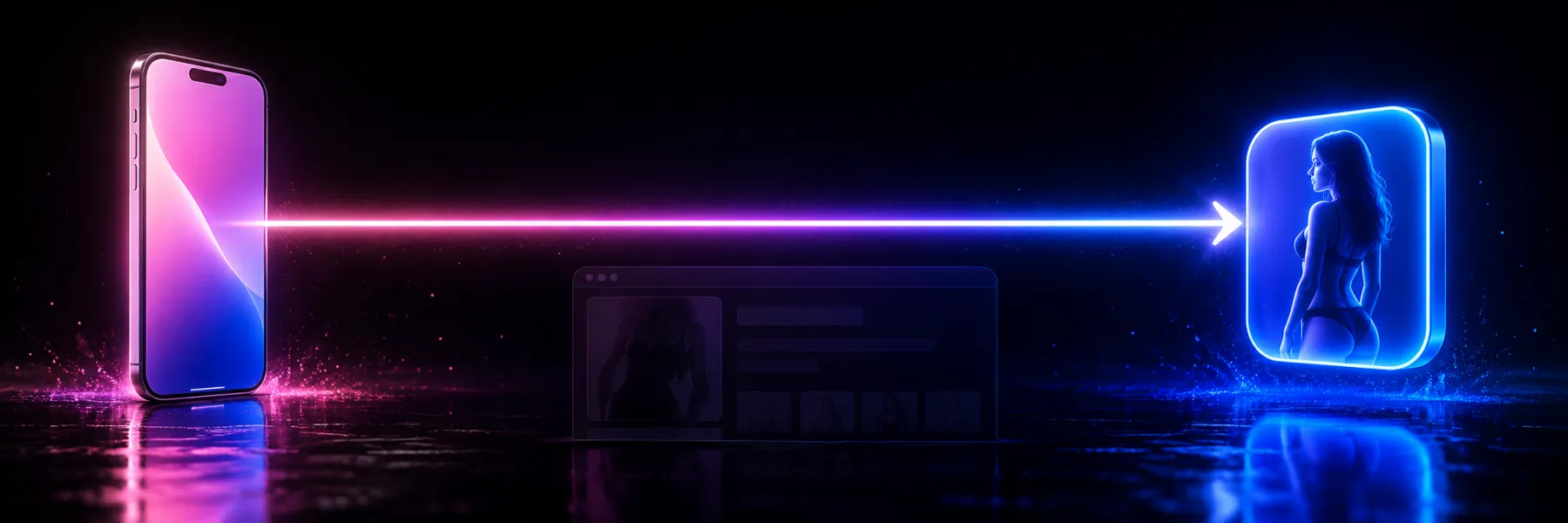
Sometimes the extra screen costs you the click. A direct link sends the fan to OnlyFans in one tap while still capturing the tracking and escaping the in-app browser at an instant redirect hop. No landing page, no lost attribution.
Tracking without the bridge
A direct link isn’t a raw OnlyFans URL — it’s a tracked link on your brand-free domain that does its work in a fraction of a second, then forwards the fan on.
- Fan taps the adThe link points at your clean, brand-free domain — not at onlyfans.com directly.
- Instant tracking hopIn that moment the match keys are captured and, if needed, the fan is bounced out of the in-app browser — all without a visible page.
- Forward to OnlyFansThe fan lands on the creator’s OnlyFans profile in one tap, and the later server-side Subscribe still ties back to the ad.
When a direct link wins
Fewer steps means fewer drop-offs. That’s decisive for the right traffic:
Warm and high-intent audiences who already know the creator, retargeting, and any campaign where speed to OnlyFans matters more than a warm-up screen.
For colder ad traffic — where you want to warm the fan and keep a neutral, brand-safe layer between the ad and OnlyFans — a landing page is usually the better tool. It’s not either/or; run both and let the numbers decide.
The trade-off, honestly
A direct link maximizes conversion by removing a step, at the cost of the extra brand-safety and warm-up a bridge page provides. Both keep full tracking and in-app-browser escape — the choice is about the fan experience and how cold the traffic is.
| What you get | Direct link | Landing page |
|---|---|---|
| Full tracking & match keys | ✓ | ✓ |
| In-app-browser escape | ✓ | ✓ |
| Fewest steps to OnlyFans | ✓ | ✗ |
| Neutral brand-safe warm-up layer | ✗ | ✓ |
| Best for warm / high-intent traffic | ✓ | — |
| Best for cold ad traffic | — | ✓ |
Questions
How is a direct link still tracked if there’s no landing page?
The link still passes through a tracking hop on your brand-free domain before forwarding the fan to OnlyFans. That hop captures the match keys and can escape the in-app browser — it just does it instantly, without showing a landing page. You keep the attribution; you drop the extra screen.
When should I use a direct link vs a landing page?
Use a direct link for warm or high-intent traffic that already knows who the creator is — fewer steps means fewer drop-offs. Use a landing page for colder ad traffic where you want to warm the fan, present a clean brand-free destination, and reduce the chance of a brand-leak restriction. Many creators run both and compare.
Does a direct link still escape Instagram’s in-app browser?
Yes. The in-app-browser escape happens at the tracking hop, before the redirect, so the fan can be bounced to their real browser even though there’s no visible landing page.
Is a direct link riskier for brand leakage?
It can be, because there’s no neutral bridge — the fan arrives on OnlyFans immediately. The link itself stays on a brand-free domain, but if brand-safety is a concern for a given campaign, a landing page gives you an extra clean layer.